The basic component of industrial production is fuel. The development of the industrial sector is largely dependent on its availability. Whether fuel will be available continuously to operate all small and large factories has become a matter of concern for entrepreneurs. Because if production is disrupted due to energy crisis, business risks arise such as not getting the expected profit on investment and reducing the ability to repay commercial loans. In such a situation, various initiatives such as low-interest loans, tax exemptions, policy support, and cash incentives cannot attract investment in the industry as expected. As a result, industrial expansion is hampered. A real example of this is the current situation in the country's industrial sector.
In the past few years, industrial growth in the country has been on a downward trend. The main reason for this is limited credit flow to the private sector and stagnation in investment. There is no room for ignoring this. However, the energy crisis is a major reason behind the desired credit growth and lack of investment. Against the demand of about 3,800 million cubic feet of gas per day, only about 2,670 million cubic feet is being supplied in the country. That is, the industry, power and housing sectors are operating with a deficit of more than 1,000 million cubic feet per day.
Many factories in the industrial area do not have the required gas pressure. In some places, production has been reduced by half, in some places factories are partially operational, and in some factories, they have completely closed. Fertilizer factories that have been closed due to gas shortage are a big example of this. Again, gas connections to new industrial establishments are practically closed due to fuel shortage. As a result, far from expanding industries,
sustaining existing industries has become a challenge for entrepreneurs. Therefore, there is no alternative to ensuring energy security to overcome this situation.
The reason behind the increasing energy crisis is the lack of priority given to the exploration and extraction of energy products from local sources. On the contrary, an import-dependent structure has been established to meet the growing energy demand. According to Petrobangla, gas production from local sources has decreased by 37 percent in the long eight years between 2017 and 2025. On the other hand, a huge amount of refined and crude fuel oil, LNG, LPG and coal are being imported every year. Huge money is being spent on importing these energy products. According to the Energy Department, the amount of LNG imported into the country every year now accounts for 25 to 30 percent of the total gas demand. The government had to spend Tk 59,000 crore in the last fiscal year to import this gas. And the subsidy in this sector was Tk 14,600 crore in the fiscal year. Again, a large part of the gas goes to power generation. Although the power sector is currently being rationed due to lack of sufficient gas. However, there are coal-based power plants with a capacity of at least seven thousand megawatts in the country.
At least 15,000 crore taka of coal is being imported for these plants every year. However, even if 20 percent of the coal available in the five mines in the country can be extracted, 1,564 million tonnes of coal can be extracted, which can meet the demand of 40 trillion cubic feet of gas, according to the Energy Department. This information makes it clear how import dependence has increased and the risk to the economy has increased instead of emphasizing on utilizing the potential of domestic energy.
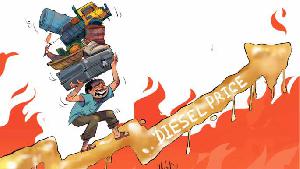
The biggest risk to an import-dependent energy structure is geopolitical instability, which disrupts the supply chain and increases prices. As a result, international and local energy markets fluctuate, the most recent example of which is the conflict in the Middle East. Earlier, in the context of the Russia-Ukraine war in 2022, a major crisis arose around energy. On the one hand, the supply crisis, on the other hand, the high prices create obstacles in all related sectors, starting from industry. Especially when production costs increase due to fuel prices, it also discourages new business expansion. Analyzing the past development and industrialization of the country, it can be seen that the reason behind this was the affordable gas supply. Since the gas supply came from local sources, it was provided to the industrial and power sectors at low cost. This has led to the production of goods at low cost, which has played a positive role in international competitiveness and meeting domestic demand. But currently, the energy crisis and its high price have become a challenge for industrial production and industrial competitiveness. This two-sided crisis needs to be overcome. The government is taking various initiatives to develop the industry. It has announced an incentive package of 60 thousand crore taka. However, to sustain and expand the industry at the field level, it is necessary to provide fuel as per the demand. For this, priority should be given to the exploration and extraction of gas as the primary fuel. One can think about how to extract coal from one's own well and keep it as environmentally friendly as possible.
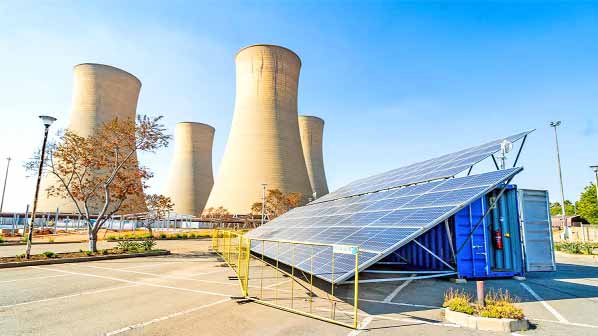
Apart from this, the most important thing in the long run is to increase the production of renewable energy. Because the demand for energy will increase further in the future, which will become difficult to meet with limited fossil fuel reserves.
Author: Journalist