Despite being a cornerstone of Bangladesh’s industrial landscape, the country’s Small and Medium Enterprises (SMEs) sector is battling a prolonged and deepening crisis that threatens to derail broader economic progress. With 11.8 million registered SME ventures employing nearly 36 million people-equivalent to 87 percent of the total industrial workforce-the sector’s stagnation is not only a blow to entrepreneurship but also a significant threat to employment, production, and economic sustainability.
Experts warn that the continued neglect of the SME sector is pushing the economy onto a wrong trajectory. While the sector holds immense potential to absorb a swelling unemployed youth population, outdated policies, lack of institutional support, funding shortages, and bureaucratic red tape are suffocating its growth.
Backbone Without Support: Industry insiders describe the SME sector as the “spinal cord” of Bangladesh’s economy, but lament that the government’s actions rarely reflect this rhetoric. “Everyone praises SMEs in public speeches, but in reality, the sector is running on its own without structured state support,” said Adilur Rahman Khan, an industrial policy advisor.
According to Khan, SME entrepreneurs reinvest nearly 30 percent of their earnings back into their businesses, contributing significantly to the national growth. (See Page-11)
(From Page-12)
Yet, Bangladesh’s SME sector contributes just 7.35 percent to the country’s GDP, far below regional peers. In India, the SME sector contributes 37 percent to GDP, while in China it’s over 60 percent.”This discrepancy reflects both a lack of institutional support and a failure to harness the sector’s full potential,” said Khan.
Unemployment Rising Amid Untapped Potential: Bangladesh is facing a growing employment crisis. The latest Bangladesh Bureau of Statistics (BBS) data shows that as of Q1 2024, the country had 2.59 million unemployed people-an increase of nearly a quarter-million within just three months. A staggering 47 percent of graduates remain jobless, pointing to an increasingly educated but idle workforce.Each year, 2.2 million new workers enter the labor market. But only 1.3 to 1.4 million find work domestically or abroad. The rest, nearly one million individuals, are left struggling to secure livelihoods.”If just 10 percent of new entrants-about 220,000 people-were empowered to become SME entrepreneurs, the employment crisis would ease significantly,” said a senior BBS official.
However, that transformation remains a distant dream due to systemic barriers: limited access to credit, outdated infrastructure, lack of market linkages, and insufficient skill development initiatives.
Financing Woes Cripple the Sector: One of the most persistent challenges faced by SMEs is access to affordable finance. Banks remain hesitant to lend to small entrepreneurs, especially first-time borrowers or those without collateral. According to the latest data from Bangladesh Bank, banks and financial institutions disbursed Tk 2,82,896 crore in loans to the Cottage, Micro, Small and Medium Enterprises (CMSME) sector in Q4 2024. While this accounts for 19.14 percent of total lending, it still falls short of the central bank’s target of 27 percent by 2029.”The reality is, many of us are not even considered eligible for loans,” said Kabir Uddin Ahmed, managing director of RK Fashion, a small garment manufacturer in Dhaka. “The process is tedious and time-consuming. Without working capital, we struggle to maintain production, let alone expand.”Ahmed also pointed to challenges in marketing, complex licensing procedures, inadequate logistics, and frequent power shortages that often derail business operations.
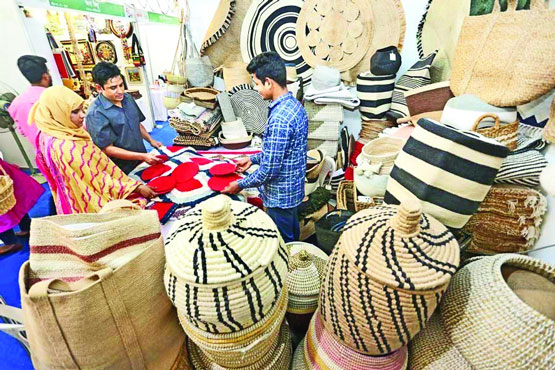
High Potential, Low Performance: Despite its structural challenges, the SME sector has shown glimpses of resilience and innovation. From handicrafts and agro-processing to light engineering and leather products, Bangladesh’s SMEs are gradually contributing to export diversification. The rise of digital payment systems and e-commerce has also helped some small businesses survive.Yet, compared to other countries, the performance remains poor.
“Bangladesh is trailing even regional peers like Sri Lanka, India, and Pakistan in terms of SME contribution to GDP,” said Anwar Hossain Chowdhury, Managing Director of the SME Foundation. “This underperformance is hurting our ability to build an inclusive and sustainable economy.”He stressed that the SME sector is a labor-intensive industry with immense potential for employment generation and export earnings. “Without proactive state support, we are wasting an economic goldmine.”
Small and Medium Enterprises (SMEs) have long been hailed as the backbone of Bangladesh’s economy. With 11.8 million SME firms operating across the country and employing over 36 million people, the sector contributes nearly 87 percent of employment in the industrial sector. Despite its immense potential, however, the SME sector in Bangladesh is struggling to achieve the level of growth and contribution seen in other developing nations. A mix of policy shortcomings, financial bottlenecks, and infrastructural limitations are slowing down what could be the most dynamic driver of inclusive and sustainable economic development in the country.
A Sector of Enormous Promise: Globally, SMEs play a critical role in economic development. According to the World Bank, SMEs account for over 90 percent of all businesses and more than 50 percent of employment worldwide. In countries like China, India, Sri Lanka, and Pakistan, SMEs contribute significantly to the national GDP-60 percent, 37 percent, 52 percent, and 40 percent, respectively. However, Bangladesh lags far behind, with SMEs contributing only 7.35 percent to the GDP in the fiscal year 2021-22.
This gap reveals an enormous untapped potential. According to industry experts like Adilur Rahman Khan, SMEs are more than just businesses-they are fundamental to the country’s economic architecture. “SME entrepreneurs reinvest about 30 percent of their profits, which makes a significant contribution to sustainable economic growth,” he said.Bangladesh is also facing an employment crisis, with 2.59 million people reported as unemployed in the first quarter of 2024, up from 2.35 million in the last quarter of 2023. Of greater concern is the fact that 47 out of every 100 university graduates remain unemployed. Each year, about 2.2 million people enter the labor market, but only 1.3 to 1.4 million manage to find employment or go abroad for work. That leaves nearly one million people each year struggling to find decent work.
According to Bangladesh Bureau of Statistics (BBS), even if 10 percent of these entrants were supported to become entrepreneurs, it could significantly alleviate the country’s unemployment problem. SMEs, by nature, are labor-intensive and can absorb a large portion of this workforce-especially if properly nurtured.
Structural Weaknesses Undermine Growth: Despite its vital importance and growth potential, the SME sector faces five core structural issues, as identified by entrepreneurs and analysts:
Access to Financing: Access to finance remains the single biggest obstacle for SME entrepreneurs. Banks and financial institutions are often reluctant to lend to new or small businesses due to their perceived risk and lack of collateral. According to Bangladesh Bank, a total of Tk 2,82,896 crore was disbursed in CMSME (Cottage, Micro, Small and Medium Enterprises) loans in the last quarter of 2024, which accounts for only 19.14 percent of total lending. This is far below the need.Although Bangladesh Bank issued a directive in March 2024 requiring banks to allocate at least 27 percent of their loans to CMSMEs by 2029, implementation remains sluggish.
Technological Lag: Many SMEs still operate using outdated production methods. Limited access to modern technology and innovation constrains productivity and product quality. As the global market becomes more competitive and tech-driven, this digital divide puts Bangladeshi SMEs at a disadvantage.
Infrastructural Constraints: Poor transport facilities, unreliable power supply, and weak logistics support are common across SME hubs. Entrepreneurs like Kabir Uddin Ahmed, Managing Director of RK Fashion, say infrastructure issues often limit production capacity. “We face frequent power outages, poor road connectivity, and logistical delays. These discourage efficiency and growth,” he said.
Lack of Market Access: SMEs often find it difficult to market their products due to high competition, lack of brand recognition, and limited networks. The absence of structured support to help them access domestic and international markets restricts their ability to scale.
Poor Regulatory Environment: The regulatory environment is frequently cited as complex and discouraging. Entrepreneurs face bureaucratic hurdles in registering businesses, securing licenses, and paying taxes. These regulatory bottlenecks not only slow down business operations but also deter many from entering the formal economy.
Policy Gaps and Insufficient Government Support: While policymakers often highlight the importance of SMEs in speeches and strategies, tangible action on the ground remains limited. There is a glaring mismatch between policy ambitions and implementation capacity.
Dr. AB Mirza Azizul Islam, former finance advisor to a caretaker government, noted that the government must step up its support through innovation, credit access, and market facilitation. “This is a labor-intensive sector. With proper backing, it can absorb a large share of the unemployed population. Innovation and diversification are essential,” he stressed.
Chairperson of the SME Foundation, Md. Musfiqur Rahman, echoed similar sentiments, stating that policy support and special budget allocations are crucial. The Foundation has submitted 140 proposals to the National Board of Revenue (NBR) ahead of the next fiscal year’s budget. While the Foundation is running several programs-ranging from skills training to cluster development-its reach remains limited. Only around 2 lakh entrepreneurs directly benefit from these initiatives, a small fraction of the 11.8 million total SME entrepreneurs in the country.Anwar Hossain Chowdhury, Managing Director of SME Foundation, said, “Our GDP contribution from SMEs is far lower than global or even regional peers. It’s crucial to increase this contribution to support broader economic development.”
Women-Owned Enterprises Struggle Even More: Women entrepreneurs face even greater hurdles. The global SME funding gap for formal, women-owned businesses is estimated at $1.7 trillion, according to the World Bank’s 2021 Findex report. In Bangladesh, women-led SMEs are even less likely to secure financing, given the additional social and institutional barriers they face.Despite their contribution to rural employment and community development, women-owned SMEs are often overlooked in financial policy frameworks. Targeted interventions, such as collateral-free loans, business mentorship, and women-centric incubators, are needed to bridge the gender gap in entrepreneurship.
Digital Platforms: A Ray of Hope: There is, however, a positive trend: the digital transformation of small businesses. The rise of e-commerce and mobile financial services is enabling some SMEs to scale up and access new markets. Entrepreneurs are increasingly using platforms like Facebook, Daraz, and AjkerDeal to promote and sell their products.Digital payments and mobile banking are also reducing transaction costs and increasing transparency. But the digital economy is still in its infancy among SMEs. A large percentage of rural businesses remain outside this ecosystem due to a lack of digital literacy and infrastructure.
Recommendations for Revival and Growth: To unlock the potential of SMEs and ensure their role in inclusive economic growth, experts and stakeholders have made several key recommendations:
Expand Access to Finance: Introduce more collateral-free and low-interest loan programs tailored to SME needs. Simplify the loan application process, especially for first-time entrepreneurs and women.Develop Infrastructure: Improve power supply, road connectivity, and logistics in SME clusters. Establish more industrial parks and SME zones with subsidized utilities.Enhance Technological Adoption: Support technology upgrades through grants or tax incentives. Promote partnerships between SMEs and universities or research institutions to drive innovation.Improve Regulatory Processes: Simplify business registration, tax filing, and compliance requirements. Create one-stop service centers to reduce bureaucratic delays.Support Market Expansion: Organize trade fairs, exhibitions, and matchmaking events to connect SMEs with buyers. Help SMEs access international certifications and packaging support to meet export standards.Invest in Human Capital: Offer regular training in management, marketing, digital skills, and product development. Prioritize skill-building initiatives for young and aspiring entrepreneurs.Leverage the Digital Economy: Promote digital literacy among SME owners. Expand access to mobile banking and online marketplaces. Provide incentives for digital onboarding.Focus on Women Entrepreneurs: Implement gender-sensitive policies and financial products. Set quotas or incentives for banks to lend to women-led businesses.