As the economic crisis in Bangladesh deepens, experts are raising serious concerns about the lack of concrete government initiatives to curb rising poverty, with many warning that the situation could worsen without swift structural reforms. While some macroeconomic steps have been taken by the interim government, poverty rates have climbed steadily, driven by a combination of high inflation, stagnant investment, and declining employment opportunities. According to a recent study, one in four Bangladeshis now lives in poverty, and 28% of the population has fallen below the poverty line over the past three years, with more than 55% of household income being spent solely on food. Yet, despite these alarming figures, analysts argue that the government’s efforts to reverse poverty trends remain insufficient and unfocused.
Poverty is No Longer a Rural Problem Alone: “Poverty is no longer confined to the rural population,” says K.A.S. Murshid, former Director General of the Bangladesh Institute of Development Studies (BIDS) and head of the government-commissioned Task Force on Economic Strategy Redefinition and Resource Mobilization. “I understand the poverty situation in the city. I know how the city’s industries have been doing in the last few years. It has not been doing well,” Murshid said, pointing out that urban poverty has surged due to factory closures, lack of new investments, and a downward trend in the economy. While the rural economy and agriculture have remained somewhat stable, this has not been enough to offset the growing urban crisis. Many businesses in metropolitan areas have shut down due to policy uncertainty, corruption, and bureaucratic inefficiency, resulting in mass layoffs. This has created a domino effect, pushing families who were once considered lower-middle class into poverty. Lack of Investment: The Root of the Problem: At the heart of the current economic stagnation is the collapse of both domestic and foreign investment, which experts believe is directly linked to growing poverty levels. “Unless investment increases, there will be no employment growth. Without jobs, poverty will continue to rise,” said Murshid. “We all know what the problems are-lack of ease in doing business, corruption, politicization of the private sector-but we are not taking bold initiatives to resolve them.”
The interim government, which came to power earlier this year with a promise to restore economic stability, has made limited progress in improving the investment climate. While some macroeconomic reforms have been initiated-such as revenue policy improvements and partial automation at the Bangladesh Bank-observers note that these actions have yet to trickle down to benefit the poor or generate substantial employment.
Inflation: A Silent Killer of Purchasing Power: A sharp rise in inflation has been another critical factor contributing to the expansion of poverty. Over the past year, essential food prices have soared, making it nearly impossible for low-income families to survive. “Inflation disproportionately affects the poor,” said a senior researcher at BIDS, who wished to remain anonymous. “When income is stagnant and prices of basic goods like rice, lentils, and oil rise sharply, families are forced to reduce their meal sizes or skip meals altogether.”
Despite this, there have been no significant safety nets or subsidies introduced to shield the poorest citizens. Although the government had announced cash transfer programs and ration cards for the extremely poor during earlier economic crises, many of these schemes have either stalled or become entangled in corruption and inefficiency.
Supply Chain Distortion and Politicization of Trade: The distortion of the supply chain, particularly in essential commodities, has further exacerbated the crisis. Murshid pointed out that businessmen with close political ties have profited during periods of high inflation, controlling commodity markets and creating artificial shortages to spike prices.
“A decision must be made to separate politics and business,” he emphasized. “A free and fair business environment is crucial if we want to stabilize prices and ensure food security.” Many in the private sector agree that the politicization of commerce and lack of competition have led to monopolistic behavior, especially in the wholesale and distribution chains of food products. This, combined with an outdated regulatory structure, has allowed prices to spiral out of control unchecked.
Task Force Recommendations Ignored: The Task Force on Economic Strategy Redefinition and Resource Mobilization, led by Murshid, had submitted a detailed set of recommendations to the interim government shortly after it assumed office. These included: Immediate investment climate reform, Job creation through public-private infrastructure projects, Expansion of the social safety net, Price stabilization measuresEmpowering local government to oversee community-level welfare initiatives. While the government officially accepted these recommendations, little has been done to implement them.
“It seems they didn’t have the time-or the political will-to think much about them,” Murshid lamented. “If even a few key reforms had been initiated, it would have sent a positive signal to the economy. But that message never came.” Revenue and Banking Reforms Are Not Enough: Though the interim government has moved forward with revenue sector reforms, including digitization of tax filing and limited automation within the central bank, experts argue these are long-term measures that won’t address the immediate crisis of poverty.
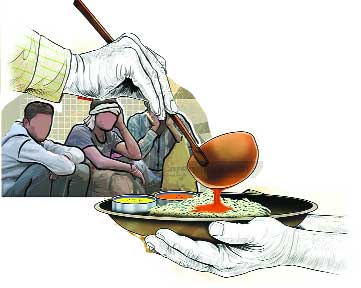
“Revenue reform is important for the future,” said an economic policy analyst at CPD. “But the crisis is now. What’s urgently needed is direct intervention-public works programs, rural employment schemes, and food distribution. These can have an immediate impact.”
Where Do We Go From Here: According to the Household Income and Expenditure Survey (HIES) 2025, poverty has increased not just in intensity but in geographic spread, now impacting previously stable regions including peri-urban and semi-industrial zones. The gender gap in poverty is also widening, with female-headed households being particularly vulnerable due to reduced access to credit, employment, and land rights.
To reverse this trend, experts are calling for: Targeted cash transfers and food subsidies for low-income households. Employment generation through public infrastructure projects. Stabilization of food and fuel prices through better regulation and import strategies. Decentralized poverty-alleviation planning with local government involvement. Reforming trade practices to eliminate political monopolies.
Political Will, Not Just Policy, Is the Missing Piece: Ultimately, economists agree that the main bottleneck is not lack of knowledge, but lack of political will. “We know what needs to be done,” said a senior economist from Dhaka University. “The challenge is implementation. The government must act swiftly and decisively, or risk losing an entire generation to poverty.” The clock is ticking. With more than a quarter of the population already below the poverty line, and millions more teetering on the edge, the next few months will be critical. Bangladesh cannot afford to treat poverty as a secondary issue-it is now the most pressing national emergency.