According to the Bangladesh Bureau of Statistics, GDP growth for fiscal year 2024-25 stagnated at 3.97 percent, marking the slowest non-Covid-era expansion in two decades. This downturn starkly contrasts with pre-pandemic growth rates that averaged between 6-7 percent.
Despite macroeconomic stability, the economy continues to falter in generating adequate employment. In industrial hubs like Gazipur, mass factory closures have driven displaced workers into informal sectors-street vending, day labor, and other precarious jobs barely sufficient for survival. The Power and Participation Research Center (PPRC) reports that 38 percent of workers lack full-time employment, relegating many to unstable “pseudo-employment” instead of meaningful livelihood.
Factories Shut, Lives Shattered: Gazipur: The Epicenter of Collapse: Gazipur, once a vibrant industrial hub, has become a hub of unemployment and protest:
In five months, 51 factories shuttered operations, with 41 permanently closed, rendering over 50,000 workers jobless. Many remain unpaid and locked in prolonged protests on major highways.
In a broader timeframe of 10 months, 41 factories shut down permanently, leaving local commerce and housing deserted, with workers forced to migrate or shift jobs. Over a seven-month span, 95 factories closed across Gazipur, Savar, Narayanganj, and Narsingdi, affecting nearly 62,000 workers, many still awaiting their dues. A labour leader estimates that 100,000 workers have lost jobs across factory shutdowns since August, with rampant protests over layoffs and unpaid wages.
These escalating closures have extinguished the livelihoods of thousands, affecting not just factory workers but entire local economies dependent on them.
Garment Sector Under Siege: Bangladesh’s garment industry-a cornerstone of its economy-provides jobs to millions and accounts for over 80% of export earnings. However, new U.S. tariffs of 35% on Bangladeshi imports are crippling the sector. Factories report shrinking orders from leading buyers like Gap and VF Corp, raising alarm over imminent job losses.
Underemployment: The Hidden Crisis: While factory shutdowns capture headlines, underemployment quietly undermines job security nationwide: In urban and rural areas alike, the bulk of the workforce remains in undervalued, informal roles. PPRC’s findings confirm 38 percent in partial or unstable employment arrangements.
A government study revealed that over 85 percent of jobs are informal, with graduates frequently settling for roles far below their skills or expectations. The disconnect between economic growth and employment opportunities is particularly harsh for youth and women. The World Bank reports that educated urban youth face high unemployment, and job creation in key sectors like garment manufacturing has stagnated.
Shrinking Investment, Shrinking Jobs: The Policy Research Institute (PRI) reports a 20-25% decline in capital machinery imports and a sharp slowdown in construction-the sectors that drive investment and job creation. Nearly 3 million people, mostly women, exited employment in 2024 alone. Ashikur Rahman of PRI warned that unless structural bottlenecks-energy, logistics, political uncertainty-are addressed, Bangladesh cannot revive job creation even with financial adjustments in place.
World Bank: Youth Unemployment in Focus: Abdoulaye Seck, World Bank Country Director, highlighted the troubling trend that growth has not translated into job opportunities for youth-especially educated youth and women. He urged bold governance reforms to restore inclusive, sustainable growth.
The International Labour Organization underscores that technological advancements and automation may further marginalize worker income, urging firms to include workers fairly in the gains of productivity growth.
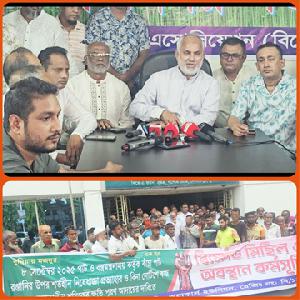
On factory floors, worker sentiments echo the experts. In Gazipur, layoffs have led to protests, highway blockades, and severe unrest. Union leaders lament unresolved salary disputes and ignored grievances.
Downward Spiral: Economic & Social Fallout: Household Destabilization: Massive layoffs push families into poverty, threatening food security, education, and health. Youth Disenchantment: Rising unemployment among educated youth contributes to social unrest and migration ambitions. Social Disorder: Protests, theft, and escalating crime are direct consequences of unemployment-driven desperation. Weakening Industrial Zones: Closure of factories causes ripple effects in supporting services-shops, housing, transport-all falling into decay.
Pathways Forward: Rebuilding Jobs, Restoring Confidence: Experts maintain that stabilizing job markets requires a multi-pronged approach: Stimulating investment: PRI stresses breaking structural constraints and restoring investor confidence in infrastructure, logistics, and governance. Youth job creation: The World Bank recommends skills programs, youth-targeted incentives, and closing the gap in female employment. Ensuring fair gains: ILO suggests worker-inclusive policies to ensure labour benefits from productivity and automation. Immediate relief for workers: Tripartite committees-government, factory owners, unions-must resolve wage disputes and support reemployment.
Diversify low-value economic dependence: As noted in public discussions, Bangladesh must move beyond garment dominance and develop indigenous manufacturing capabilities to avoid middle-income traps.
Jobs as Lifelines, Not Statistics: Bangladesh’s 3.97% GDP growth in 2024-25 may appear stable on paper, but the narrative behind the numbers speaks of stranded workers, collapsed industries, and slipping hope. From Gazipur’s ghost factories to underemployed graduates, the job crisis is fast becoming a human catastrophe.
Experts insist that unless the country revives investment-driven growth, mends labour disputes, supports its youth, and ensures that economic recovery translates into real jobs, the recovery will remain shallow. Rebuilding Bangladesh’s future means restoring livelihoods-one factory, one worker, one community at a time.