Bangladesh’s heavy industrial sector is facing one of its toughest periods in recent years, with factory owners expressing growing fears over capital losses as production declines and profit margins crumble. A combination of chronic gas and electricity shortages, coupled with prolonged political instability and recent devastating industrial fires, has pushed the sector into what business leaders describe as a “critical survival phase.”
The turbulence, industry insiders warn, is not just a temporary setback. It threatens to derail investment confidence, slow domestic industrialization and construction, and reduce Bangladesh’s long-term economic competitiveness. Gas and power crisis choking production: Over the last year, industrial gas prices skyrocketed. Heavy industry entrepreneurs said natural gas tariffs surged by as much as 178 percent during the 2023-24 fiscal year. In April, the Bangladesh Energy Regulatory Commission (BERC) approved yet another 33 percent price hike for gas supplied to new industries and captive power plants.
Despite paying sharply higher tariffs, manufacturers say they are often unable to operate even at permitted load capacity. When they exceed 50 percent of their approved load limit, they face punitive pricing. “We are stuck paying exorbitant gas prices without receiving uninterrupted supply,” one manufacturer said. “Production stalls, but expenses keep rising.” Electricity, too, has become increasingly expensive. Over the last 14 years, the government raised electricity tariffs nine times, increasing wholesale power prices by 118 percent and retail consumer prices by 90 percent. Manufacturers insist that the steep and steady rise directly inflates production costs and weakens profit margins.
Political unrest adds pressure: Political instability following a shift in the national political landscape has had a deep impact on industry. Business owners report that protests, violence, and uncertainty have stalled trade and construction. According to industrial sources cited in Daily Industry, around 250 small and medium factories have closed during the past year, leaving nearly 150,000 workers unemployed.
Moreover, owners allege that many entrepreneurs have been targeted with harassment lawsuits that have disrupted business continuity. “Some of us are operating under enormous legal pressure,” one factory operator lamented. “We are just trying to survive.”
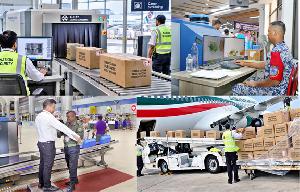
Import crisis and capital losses mount: The crisis deepened this year after a series of catastrophic fires hit key industrial facilities, including chemical factories and warehouses. The most damaging blaze occurred inside the cargo village at Dhaka airport, where imported industrial raw materials worth nearly Tk 12,000 crore reportedly turned into ashes. Business associations say recovery from such a huge loss will take years
for affected companies.
Heavy industry’s distress is showing up in trade statistics. The National Board of Revenue (NBR) data indicates that clinker imports, the primary raw material for cement, dropped from 20.4 million tons in FY 2023-24 to 19 million tons in FY 2024-25, a decline of 7 percent. Similar declines are taking place in other critical heavy industrial inputs:
Ship-breaking yards, a major source of scrap steel, imported 8.45 lakh tons of iron in FY 2024-25. In the previous fiscal year, imported ships contained nearly 10 lakh tons of iron. This reflects a 15 percent year-on-year drop. The import slowdown underscores shrinking domestic demand and investor reluctance.
Cement industry: Sales steady, profits collapse: The construction sector has been one of the hardest hit. Demand for steel rods, cement, tiles, and ceramics has dropped sharply as both private real estate projects and public infrastructure spending have slowed.
President of the Bangladesh Cement Manufacturers Association (BCMA), Mohammad Amirul Haque, expressed both worry and cautious optimism in comments to Daily Industry: “Everyone hopes that through a fair and acceptable national election, a new government will take charge and revive the industry. Over the past year, while cement demand has not declined severely, profits have collapsed. We have had to reduce profit margins significantly just to maintain basic sales and stay afloat.” He added that a stable political environment is essential for industry to recover and expand again.
Foreign and domestic investment on hold: Bangladesh Bank data indicates that the decline in investment is driven by multiple interconnected factors: Political instability, rising interest rates, Severe gas and power shortages. Even factories that are still running are operating below capacity due to irregular utilities. Investors at home and abroad are delaying new ventures until the political and regulatory climate stabilizes.
Total imports in FY 2024-25, across all sectors, amounted to 13.71 crore tons with Tk 6.7 lakh crore in expenditure, compared to 13.17 crore tons and Tk 6.16 lakh crore in FY 2023-24. Although the volume of imports grew slightly by 4 percent, heavy industrial raw materials - vital for construction and manufacturing - recorded negative growth.
Consequences for the broader economy: Heavy industry is the backbone of Bangladesh’s domestic infrastructure growth. Reduced industrial output has spillover effects: Construction slowdown reduces labor demand. Housing projects stall, pushing developers and financiers into uncertainty. Domestic supply chains shrink, raising pressure on final prices. Export prospects weaken due to lack of industrial raw materials. If the situation does not improve soon, economists warn, Bangladesh may face prolonged stagflation: low growth combined with high production costs and unemployment.
Business owners fear a capital crisis: Industrialists worry that continued stress could lead to irreversible losses: Banks are tightening lending terms due to liquidity shortages. Many factories struggle to repay existing loans. Input prices rise while selling prices stagnate. Skilled workers migrate to informal or overseas jobs.
Factory owners repeatedly express fear of losing their decades of accumulated capital. “We invested everything with the belief that Bangladesh’s industrial future was bright,” says a heavy industry entrepreneur in Gazipur. “Now, every day feels like a battle to prevent collapse.”
A fragile hope tied to stability: Industry leaders believe the path to recovery rests squarely on political calm and continued energy sector reform. They are urging the government to: Ensure uninterrupted gas and electricity supply. Stabilize policy and regulatory frameworks, Support industries recovering from fire and operational losses, Encourage new and rehabilitative financing for struggling sectors. Investors want to see signals that Bangladesh remains committed to industrial modernization, export diversification, and economic stability. The BCMA President echoed this sentiment: “The sooner a fair election takes place, the sooner industry will regain its momentum.”
The road ahead: Bangladesh’s ambition to become a manufacturing powerhouse faces a critical test. If political tension eases, fuel supply improves, and investment confidence returns, heavy industry may rebound with renewed strength. If not, continued factory shutdowns and rising unemployment could further weaken the country’s economy at a time when global competition is intensifying.