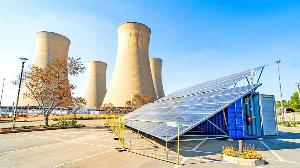
Somewhere in the accumulation of master plans, policy revisions, ministerial commitments and consultancy reports that have shaped Bangladesh's energy sector over the past two decades, a silent but significant decision was made-not in a cabinet room or parliamentary debate, but spontaneously. The decision was to transform Bangladesh into one of the most import-dependent energy economies in the developing world. According to data from the Institute for Energy Economics and Financial Analysis (IEEFA), the power sector's import dependency, in terms of the combined share of imported electricity, coal, liquefied natural gas (LNG) and fuel oil, rose from about 5 percent to about 65 percent between fiscal year 2009-10 and fiscal year 2024-25. At the same time, the cost of generating electricity has more than quadrupled. And as a result of years of rising costs and increasing dependence, Bangladesh's renewable energy capacity, in a country with a total installed capacity of over 27,000 MW, has slowly declined to just 1,690.7 MW. According to IEEFA's analysis as of February 2026 and data from the Bangladesh Investment Development Authority, just over five percent of the electricity supplied through the national grid will come from renewable sources by early 2026.
The newly elected BNP government has inherited this system entirely. This comes at a time when its internal conflicts are harder than ever to ignore: the power sector is saddled with capacity payment obligations, the gas import bill has cost $17.6 billion for about 1,500 billion cubic feet of LNG from August 2018 to mid-July 2025-just over one and a half times the country's current annual domestic gas production-and the renewable energy sector is so beset by a lack of investment, policy consistency, and supporting infrastructure that it has virtually stalled. The question the new government must now answer-urgently, specifically, and with far greater rigor than its predecessors-is whether Bangladesh will continue on its old path, or will it deliver the kind of change it has been promising for most of the past fifteen years.
There is no dispute about the scale of the problem. According to a December 2025 analysis by the IEEFA, Bangladesh's domestic gas reserves are depleting at an estimated 4.64 percent per year. In 2022, the government itself estimated that the country's domestic gas supply would last less than eleven years at then-current consumption rates. The response to this shortage-which successive administrations have vigorously pursued-has been to use imported LNG instead of domestic gas, without commensurate investment in local exploration or renewables. The consequences of this substitution have been dire. When global LNG prices rose after Russia's invasion of Ukraine, Bangladesh was hit hardest: according to Zero Carbon Analytics, Asian LNG prices rose 390 percent in the year before the invasion and another 48 percent in the five months following. The country cannot afford to import enough, nor can it produce enough domestically to compensate, and this resulted in the 2022 load shedding crisis that disrupted industrial production in the garment sector-an industry that contributes more than 80 percent of Bangladesh's export earnings-and disrupted the daily lives of millions of families.
The practical lesson that should have been learned was that an energy strategy built on imported fossil fuels is structurally fragile. Instead, the draft Energy and Power System Master Plan 2026 (EPSMP 2026), unveiled by the outgoing interim government in January 2026, essentially repeated the logic of its predecessors. The plan calls for about 47 percent of installed power generation capacity by 2050 to come from renewable sources, which sounds ambitious, but when you look at the details, it is not: the plan aims to keep the share of LNG in total gas consumption below 40 percent by 2050, up from 28.8 percent in the 2024-25 fiscal year. According to a February 2026 review by the IEEFA, LNG imports would more than double from current levels in terms of volume, and demand is forecast to reach 40 percent of total gas consumption by 2050, at 5,000 million cubic feet per day. Importantly, the plan assumes more than double the investment in LNG infrastructure compared to domestic gas exploration - meaning that, regardless of the verbal commitment to renewables, the institutional and financial framework being created will entrench dependence on gas for decades to come. This is not a transition plan. This is a continuity plan wrapped in a green blanket.
The BNP government's election manifesto promised to increase renewable energy capacity from the current 5 percent to 20 percent by 2030-a goal that was also included in the 'Renewable Energy Policy 2025' approved in June last year. The number is right. But the trajectory is not. To reach 20 percent by 2030, it is necessary… According to IEEFA calculations, about 760 MW of renewable power generation capacity will need to be acquired annually between January 2026 and December 2030-up from the current base of 1,690.7 MW, with only 358 MW under construction. As IEEFA's March 2026 analysis of the new government's energy priorities noted, meeting this goal will require an acceleration of annual investment flows in the renewable energy sector by 4.1 times compared to the previous period. According to the IEEFA's June 2025 report on renewable energy financing, this would require raising $980 million per year until 2030 and $1.46 billion per year thereafter until 2040. New investment in renewable energy has virtually stagnated in 2025, compared to an average of about $238 million per year in previous years - a paltry sum compared to what is needed. The government's 2030 target is achievable. The conditions are not yet in place to make it achievable.
The existing power sector financial structure is itself an obstacle to transformation. According to IEEFA, the Bangladesh Power Development Board's outstanding payments to independent power producers exceeded Tk 270 billion (about $2.21 billion) as of November 2025. Citing lower-than-expected growth, political uncertainty, and banking sector risks, Moody's downgraded Bangladesh's sovereign credit rating to B2 from B1 in November 2024 - a downgrade that makes external borrowing more expensive at a time when the country needs to attract large-scale international capital for its renewable energy projects. The taka depreciated by about 27 percent against the U.S. dollar between May 2022 and January 2025, making project financing more difficult for power developers, whose revenues are in local currency but whose capital expenditures are in foreign currency. These are not minor obstacles. They are structural barriers that cannot be solved by ambitious targets alone.
There is also a subsidy issue that the new government will not be able to avoid for much longer. The IMF, from whose $5.5 billion loan facility Bangladesh is drawing down in installments, has explicitly mandated a reduction in power and fuel subsidies by 2028 as a condition of the program. According to the IEEFA's October 2025 'Energy Trilemma' analysis, the government has allocated Tk 370 billion ($3.03 billion) for power generation subsidies and Tk 90 billion ($740 million) for LNG imports in the 2025-26 fiscal year. The difference between the average price of buying and selling electricity on the grid is about Tk 4.5 per kilowatt-hour. Even though the spot price of LNG is only $11 per metric million British thermal unit, the government is incurring huge losses on each unit of regasified LNG supplied to the power and commercial sectors-losses that are ultimately borne by an economy that cannot afford them. According to IEEFA's analysis, even if subsidies were reduced by 50 percent, the average selling price of wholesale electricity for distribution companies would have to increase by more than 25 percent, which would have an impact on the competitiveness of the garment sector that no commerce minister would want. The only way out of this trap, where there is no trade-off between financial viability and industrial competitiveness, is to accelerate the use of affordable renewable energy - according to the Bangladesh Investment Development Authority, the levelized cost of electricity for solar power ($97-135 per megawatt-hour) has already become almost equivalent to that of gas ($88-116 per megawatt-hour) and cheaper than coal ($110-150 per megawatt-hour).
In this sense, the reason for prioritizing renewable energy is not primarily environmental. It is financial. It is strategic. The argument is that a country that has spent $17.6 billion on LNG imports over seven years-one and a half times its annual domestic gas production-could spend a fraction of that on solar and wind power capacity, which could generate electricity indefinitely without the currency risk, price volatility, and geopolitical dependence on the global LNG market, while Bangladesh is inevitably a price taker rather than a price setter. According to BIDA, Bangladesh receives an average of 5 kilowatt-hours of solar radiation per square meter per day. Its wind resources, which are 3 to 4.5 meters per second, are suitable for large-scale development. It has a coastline along the Bay of Bengal that offers opportunities for offshore wind farm development, but no master plan has yet considered this resource with the importance it deserves. The potential for renewable energy is there. The gap is between the potential and its implementation.
What the BNP government needs to do now-if its election manifesto promises mean anything-is to systematically address every obstacle holding back investment in renewable energy. In a densely populated country, where agricultural land is politically and economically sensitive, land acquisition for large-scale solar projects has been a long-standing obstacle; the government should speed up the process of allocating land within economic zones and along infrastructure.
Infrastructure corridors for renewable energy development must be created, as recommended by the IEEFA in February 2026. The removal of the 'implementation agreement' clause-which is effectively a sovereign guarantee-from renewable energy tenders has discouraged investors who need assurances of bankability; this must be reconsidered. As noted in the IEEFA June 2025 Financing Report, a specialized green finance facility, including a credit risk guarantee scheme and pre-financing mechanism through Bangladesh Bank's Green Fund, is essential to accelerate the growth of small projects that commercial banks currently consider too risky to lend to. Import duty on solar components needs to be rationalized: As observed by IEEFA, the budget for FY 2025-26 did not provide any incentives for the private sector to expand into the renewable energy sector, despite maintaining the gas import subsidy system.
Regional cooperation should also be considered a real strategic option, not an aspiration. Bangladesh has a 40 MW power trade agreement with Nepal. The potential for importing hydropower from Nepal and Bhutan is huge-at prices that would be competitive with domestic gas, let alone imported LNG-and this supportive diplomacy deserves sustained attention from a government that has expressed ambitions to improve regional relations.
The draft EPSMP 2026 should not be rushed into approval. The Center for Policy Dialogue, in its January 2026 analysis of the plan, warned that it "overemphasizes LNG imports" and fails to provide a structural basis for the expansion of renewable energy. The IEEFA, in its February 2026 critique, similarly indicated that securing LNG investment at more than double the rate of domestic gas exploration would perpetuate decades of supply instability and financial risk. These are not ideological objections. They are financial and strategic objections, based on the documented failures of the previous three master plans.
Bangladesh has not yet become irreversibly dependent on gas.
This deadlock will arise if the new government approves the EPSMP 2026 as drafted, builds its proposed LNG infrastructure, and postpones the crucial task of deploying renewables until the third phase starting in 2040 - by which time the economic and climate damage of this delay will have grown beyond repair. The debate presents the choice between green energy and gas dependence as a dilemma. But it is not. One path leads to sovereign energy security, falling costs, and a power sector that is not hostage to the spot price of a commodity that Bangladesh does not produce. The other path leads Bangladesh deeper into the trap it has created for itself since 2016. The new government has the mandate, the policy framework, and - for now - the political space to choose a different path. Whether the government does so, or reaches for the familiar comfort of an LNG import terminal, will determine Bangladesh's energy economy for the next twenty-five years.
Author: Researcher and development professional