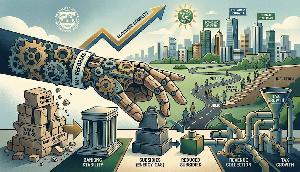
For the first time in history, default loans in Bangladesh’s banking sector have soared past Tk5.0 lakh crore, marking a staggering increase of about Tk3.19 lakh crore within just one year. Experts and bankers warn that this dramatic escalation reflects long-suppressed vulnerabilities now laid bare by stricter classification norms.
Eye?Popping Numbers: As of June 30, 2025, defaulted loans reached Tk?5,30,428 crore, representing roughly 30% of all outstanding credit-a historic high. A year earlier, at June 2024, non-performing loans stood at just Tk?2,11,391 crore, equal to 12.6% of total loans. Over nine months (from December 2024 to September 2025), defaults surged first to Tk?3.45 lakh crore-then rose further to Tk?4.20 lakh crore by March 2025.
Why Such a Sharp Rise: New Loan Classification Rules, under directives implemented on April 1, 2025, Bangladesh Bank reduced the grace period for overdue classification from 180 days to 90 days-bringing loan classification in line with Basel III standards. As a result, loans previously considered “performing” are now classified as non?performing much earlier. Closure of Concealment Channels: Loans that were once systematically rescheduled, restructured, or concealed under political and financial patronage can no longer be hidden.
This has rapidly brought long-latent bad assets into the official books. Economic Slowdown & Institutional Collapse: Business recession, industrial distress, and the collapse of multiple institutions have undermined borrowers’ ability to repay. Some business owners are incarcerated or absconding, further eroding recovery prospects.
Voices from the Field: Syed Mahbubur Rahman, Managing Director of a leading private bank, explains:”Loans that were kept secret earlier are now being shown as defaulted. Due to this, defaulted loans have suddenly increased. As a result, banks are facing a liquidity crisis, the pressure to maintain provisions is increasing and profits are decreasing.” Indeed, banks across the spectrum are now under pressure to preserve capital and meet rising provisioning needs.Meanwhile, economists and financial observers reflect on the historic buildup:When the Awami League assumed power in 2009, defaulted loans were only Tk?22,481 crore, or 1.4% of outstanding loans.Over the past decade, lax oversight and political intervention led to widespread rescheduling and write-offs-masking the true scale of distress.
Sector Breakdown: Where Are the Defaults Concentrated: According to Bangladesh Bank data as of March 2025.
Top defaulters include majors such as Janata Bank, Rupali Bank, Agrani Bank, Islami Bank, and Agrani-several of which report NPL rates above 30%-while institutions like Union Bank had default portfolios exceeding 87% of their credit books.
Systemic Risks & Liquidity Crunch: Analysts warn the rapid rise in NPLs is severely diminishing banks’ lending capacity. Provision shortfalls are mounting: banks should have held Tk?2.75 trillion in loan-loss reserves by March 2025, but had only Tk?1.04 trillion-leaving a shortfall of Tk?1.70 trillion. The central bank also flagged five systemic drivers, including regulatory gaps, poor governance, capital flight, and money laundering-all exacerbating credit deterioration. Reforms in Motion: Following a regime change in August 2024, Bangladesh Bank took bold steps: dissolving bank boards, reshuffling management in private and state banks, injecting liquidity (about Tk?30,000 crore) into crisis-hit institutions, and inviting new investors to recapitalize weak banks.Governor Ahsan H. Mansur announced plans for consolidation, restructuring bank laws, merging weak banks, and possibly forging an asset management company to offload toxic assets. Meanwhile, in its February 2024 roadmap, Bangladesh Bank set ambitious targets: reduce NPLs to below 8% by June 2026-state banks to 10%, private banks to under 5%. Some analysts argue consolidation of the 61 small and illiquid banks into 8-10 large institutions could help reduce systemic risk. One proposal urges redistributing control away from conglomerate-linked banks to credible owners and segregating insider lending influence.
The Daily Industry: A Voice of Clarity: As The Daily Industry succinctly put it:”The central bank’s transparency measures are unmasking the hidden liabilities. The surge in defaults is painful, but necessary if we are to reset banking discipline and restore confidence.”
The editorial praised the new classification system as a critical step-but cautioned that recovery will require time, persistence, and structural change.
Why the 5 Lakh Crore Milestone Matters: Exposure of Hidden Risks: The surge reflects long-concealed corruption, insider lending, and political patronage within the banking system.Capital Crunch: Banks are now forced to set aside enormous reserves, squeezing profitability and curbing loan issuance.Credibility Test: With default rates approaching 30%, global confidence in Bangladesh’s financial sector is at risk.Reform Window: Although painful, current transparency and reform efforts offer a rare opportunity to overhaul governance and restore health.Macro?economic Threat: A sustained banking crisis could deepen the broader economic slowdown-constraining growth.
Default Loan Timeline
The banking sector faces a pivotal moment: bring down default burdens or face systemic collapse.The rise in default loans from Tk?2.11 lakh crore in June 2024 to Tk?5.30 lakh crore by June 2025 is more than a financial milestone-it reflects a structural reckoning. Bangladesh Bank’s reformed classification standards and renewed oversight are revealing the true scale of banking-sector distress.As quoted by The Daily Industry, the disclosure of hidden liabilities is a “painful but necessary” step toward restoring discipline. With bold reforms and credible governance, the sector may yet reset itself. But until provisions, governance, consolidation, and legal recovery take shape, the risk remains systemic-and real.