As the world marches toward a population of 9 billion by 2050, the pressure on global food systems continues to intensify. Rising demand, shrinking natural resources, and the accelerating impact of climate change are converging to threaten food production like never before. For countries such as Bangladesh-highly vulnerable to climate shocks and heavily reliant on agriculture-the challenge is even more acute. Experts warn that without a transformative shift toward climate-resilient farming, food security will become increasingly uncertain.
According to UNDP data, extreme weather events linked to climate change have already pushed 1.1 billion people into severe multidimensional poverty across 109 countries. Another 900 million people remain at risk due to exposure to heatwaves, floods, droughts, and toxic pollution. A global report from the Poverty and Human Development Initiative reveals that 880 million people are already facing at least one direct climate-related threat: 600 million suffer extreme heat, 570 million face pollution, 460 million endure recurrent floods, 200 million are affected by prolonged droughts. These environmental stresses increasingly undermine basic human needs-housing, sanitation, electricity, and education-especially in climate-vulnerable nations.
Bangladesh: A Frontline Victim of Climate-Induced Agricultural Losses: Bangladesh stands among the world’s most climate-sensitive countries. The frequency of floods, droughts, cyclones, salinity intrusion, and riverbank erosion has risen sharply over the past decade. These hazards have already disrupted crop cycles, damaged infrastructure, and caused massive economic losses.
If climate challenges remain unaddressed, experts fear Bangladesh’s GDP growth could decline by up to 6.7% by 2050. Scientific projections show that a 4°C rise in temperature could reduce rice yields by 28% and wheat yields by 68%. Similarly, a 0.65-meter rise in sea level may submerge 40% of the fertile land in the southern coastal region-bringing devastating consequences for national food production.
Dr. Selim Reza, agricultural economist and a regular analyst quoted by Daily Industry, notes: “Bangladesh is losing agricultural productivity faster than it can recover. Without climate-resilient farming, we risk entering a prolonged food insecurity cycle.”
Traditional Farming No Longer Enough
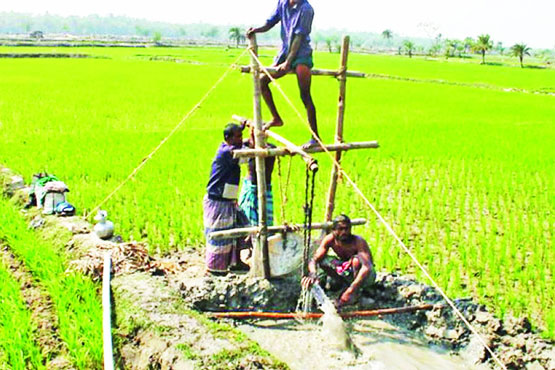
The decline in soil fertility, scarcity of fresh water, and the growing unpredictability of weather patterns mean traditional farming alone cannot sustain future food needs. Climate-induced disruptions underscore the necessity for Climate-Smart Agriculture (CSA)-a technology-driven approach that enhances productivity, strengthens resilience, and minimizes greenhouse gas (GHG) emissions.
CSA focuses on three core areas: Increasing agricultural productivity, Enhancing resilience to climate shocks, Reducing GHG emissions. Bangladesh’s vulnerability makes the adoption of CSA not just an option-but an urgent necessity.
Greenhouse Gas Emissions in Agriculture: A Growing Concern: Bangladesh currently emits 281.38 million metric tons of CO? equivalents annually. Of this: 44.8% is carbon dioxide, 40.1% methane, 13.1% nitrous oxide.
A significant proportion of methane and nitrous oxide emissions come from paddy cultivation, livestock digestion, and excessive fertilizer use. Agriculture-combined with livestock, fisheries, and forestry-contributes 37.35% of the country’s total emissions. Energy, however, remains the largest emitter at 55.7%, coming from: Power generation,
Transport, Industry, Households, Brick kilns.
Meanwhile, 52% of methane originates from livestock, 41% from crops, and nearly 7% from fisheries. Dr. Mahbub Hasan, climate and environmental analyst, told Daily Industry: “Agriculture is no longer a passive victim of climate change-it has become a major emitter itself. We must reform fertilizer use, water management, and livestock practices to meet our emission reduction goals.”
Bangladesh’s Commitments under NDC 3.0: Under the Nationally Determined Contributions (NDC) 3.0: Bangladesh aims to cut emissions by 6.39% unconditionally by 2035, With international financing, the total reduction target rises to 20.31%, Sector-wise reduction pledges include: 26.66% in energy, 7.71% in industry, 11.46% in agriculture. Yet independent assessments show emissions from farming and livestock are rising, not falling.
Mitigation Efforts: Still Limited but Expanding: The government has initiated several mitigation-related programs in agriculture, including: Deep-placement urea technology (UDI) to reduce fertilizer wastage, Use of lime to neutralize soil acidity, Alternate Wetting and Drying (AWD) in irrigation, Precision farming for fertilizer and pesticide management, Improved livestock feeding and manure management, Solar-powered pumps and fishing vessels. However, these interventions still remain small-scale.
Dr. Farzana Ali, former agricultural extension specialist, said to Daily Industry:
“Bangladesh has excellent innovations but poor scalability. We have solutions, but the gap between research stations and farmers’ fields remains far too wide.”
Adaptation: Where Bangladesh Has Made Stronger Progress: Bangladesh has shown notable progress in adaptation through the development of stress-tolerant crop varieties. Local research institutes-BRRI and BINA-have introduced dozens of high-yielding rice varieties resistant to: Salinity, Floods, Drought, and Submergence. Similar progress has been made in wheat, maize, jute, and fodder crops such as Napier grass.
Other adaptation techniques include: Crop rotation, Crop diversification, Intercropping,
Improved crop sequencing based on rainfall and temperature patterns.
For example, crop sequences differ between the Barind region and the central plains due to varying rainfall, soil type, and temperature. These measures help maintain soil health, improve environmental balance, and enhance farmers’ income-collectively strengthening food security.
Food Security: A Growing Challenge despite Progress: Even with adaptation efforts, Bangladesh remains extremely vulnerable. The competing pressures of rising population, shrinking arable land, and climate-induced crop losses point to a looming food security crisis without major reform. Dr. Abu Tayeb, a food security analyst quoted in Daily Industry, warned: “Bangladesh may maintain production growth today, but climate change is eroding its future capacity. Without major investment in research, extension, and climate finance, the food system could face severe instability within two decades.”
Why Financing Is the Biggest Roadblock
Bangladesh estimates it will require USD 117 billion to implement climate mitigation and adaptation measures by 2035. 23% must come from the government, 77% must come from international climate financing. But accessing global climate funds remains a major challenge due to procedural complexities and political conditions.
The upcoming COP-30 conference in Belém, Brazil, scheduled from November 10-21, 2025, presents a critical opportunity. Bangladesh’s delegation is expected to advocate strongly for: Increased global climate financing, Renewable energy support, Loss and damage compensation, Greater recognition of agriculture as a climate priority. Experts say Bangladesh must negotiate more strategically to secure the funds needed.
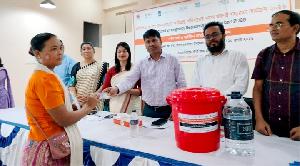
A Call for Stronger Action: To safeguard future food security, experts emphasize several urgent actions: Greater investment in climate-smart research, Faster transfer of new technologies to the field, financial incentives for farmers adopting CSA, Improved coordination between government, donors, private sector, and NGOs, Training programs for farmers, especially women, Stronger climate-risk communication, Enhanced soil and water management, Scaling up renewable energy in agriculture.
Dr. Habibur Rahman, senior advisor to the National Planning Commission, told Daily Industry: “Climate-resilient agriculture is no longer a niche concept-it is the backbone of future food security. Bangladesh must treat agricultural adaptation as a top national priority.”