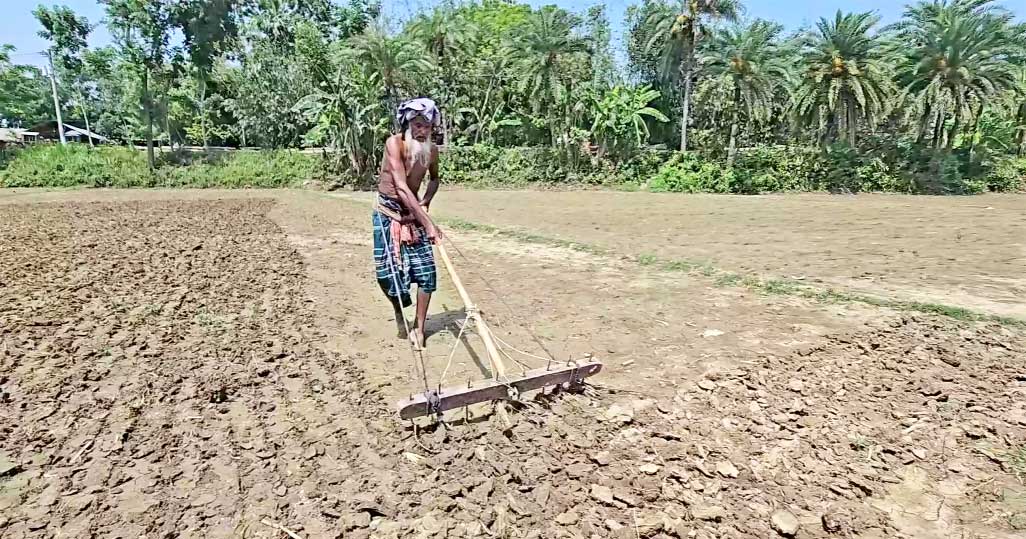
Faridpur, known as Bangladesh’ jute capital,is facing a looming setback in jute production as farmers struggle with an acute shortage of diesel during the crucial sowing season. The shortfall in fuel coupled with irregular electricity supply, has disrupted irrigation activities across the district, raising fears that jute output may be affected this season.
However, agricultural officials remain cautiously optimistic, saying a couple of spells of heavy rainfall could ease the crisis.
According to the Department of Agricultural Extension (DAE) in Faridpur, the target for jute cultivation in the current Rabi season has been set at 87,000 hectares.
Farmers typically begin sowing jute seeds immediately after harvesting onions, relying heavily on irrigation to prepare the fields. So far, around 60 percent of the targeted land has already been brought under cultivation.
The ongoing Iran-Israel conflict has impacted global oil markets, leading to a fuel shortage in the country that is now affecting agricultural operations at the local level.
With diesel supplies falling short and power outages persisting, many growers are worried about meeting irrigation needs on time.
Local farmers from Saltha and Nagarkanda upazilas said timely irrigation is critical for jute cultivation.
“The soil needs to retain some moisture during sowing so that the seeds can germinate properly. Without adequate water, germination is poor,” one farmer explained.
Jute growers in Boalmari including Paritosh Kittunia, Moniruzzaman and Mizanur Rahman, echoed similar concerns.
Frequent load-shedding, lack of fuel, falling groundwater levels, and fertiliser shortages — everything together has made farming extremely difficult,they said.
Sahida Begum, a model farmer in the district, said prolonged diesel crisis could reduce not only jute production but also output of other crops.
Shahduzzaman, deputy director of the DAE in Faridpur, said the department has introduced fuel cards to ensure diesel supply reaches genuine farmers. “We hope this will provide some relief. Moreover, a couple of heavy rainfall during the season could significantly reduce the current pressure,” he added.
Faridpur Deputy Commissioner Mohammad Kamal Hasan Molla said the administration has designated specific filling stations to facilitate easier access to diesel for farmers and intensified monitoring of fuel distribution across the district.
“We are prioritising jute farmers during this critical period to ensure irrigation activities continue uninterrupted,” he said.
Farmers said any prolonged disruption could severely affect crop production, leading to financial losses for growers and broader economic repercussions for the country.