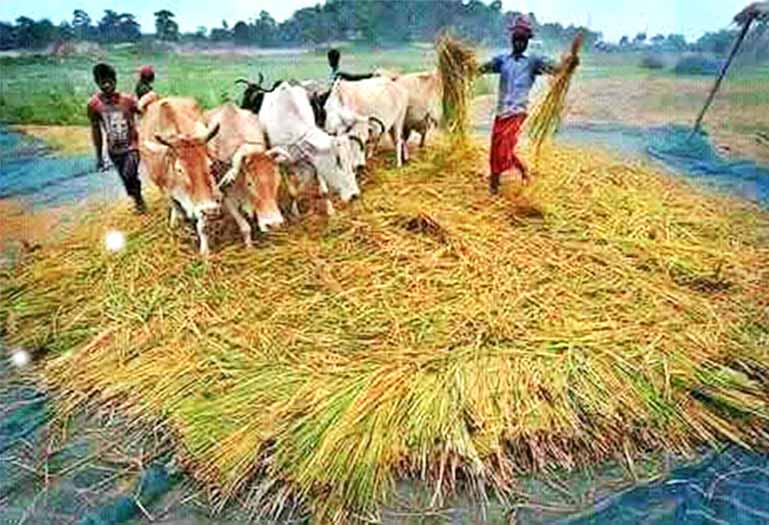
The once-common traditional method of rice threshing using cattle is gradually disappearing from rural Bangladesh, including Nabinagar, due to the rapid advancement of modern agricultural technology.
With the increasing use of machinery in agriculture, tasks such as ploughing, planting, harvesting, threshing, and even processing rice are now being completed using modern equipment. Farmers who once relied on cattle for ploughing are now using tractors and other advanced machines.
Bangladesh, known for its natural beauty, seasonal diversity, and rich rural culture, once showcased vibrant scenes of farming life-farmers cutting paddy during the day and threshing it at night using cattle. Despite their hard work, smiles were common on the faces of farmers and their families. After threshing, rural households would celebrate the Nabanna (new harvest festival) with freshly harvested rice, pithas, and traditional dishes.
Now, with the use of power tillers, irrigation pumps, and modern harvesting machines, agricultural work has become faster and more efficient. Farmers no longer need to depend on rainfall, as irrigation systems meet water demands.
The traditional scene of farmers threshing paddy overnight using cattle-accompanied by rhythmic sounds and collective effort-is rarely seen today.
However, some farmers still occasionally practice this traditional method out of nostalgia and cultural attachment. Local farmer Abu Rahim said that although modern technology has transformed agriculture, preserving such traditions is important.
Another farmer, Monir Hossain, noted that while technological advancements have revolutionized farming, they are also causing the gradual loss of cultural heritage and identity.
Experts and locals emphasize the need to preserve these traditions alongside modern practices so that future generations can understand and appreciate their agricultural roots. Traditional farming is experiencing a global, gradual decline, characterized by the shrinking number of small-scale family farms, loss of indigenous crop varieties, and the erosion of traditional knowledge. This shift is driven by agricultural industrialization, climate change, and economic pressures, leading to a profound transformation of rural landscapes and food systems. Key factors and trends in the disappearance of traditional farming includes economic Pressure and consolidation small farmer crisis.
: Small-holding farmers are facing immense challenges in sustaining their livelihood, often leading them to quit farming.Farm Consolidation: Thousands of small family farms are being sold or absorbed by larger corporate entities.Declining Income: Farmers struggle to get fair prices at harvest, often selling at a loss due to market, middlemen, and logistical problems.Loss of Free Labour: Traditional, informal cooperative labor (e.g., collective work among villagers) is disappearing.2. Technological Modernization & IndustrializationShift to Industrial Farming: Traditional methods are being replaced by high-intensity, chemical-dependent, and mechanized practices.Loss of Knowledge: As older generations retire, their localized knowledge of soil health and weather is not fully transferred to younger generations.Disappearing Crops: Indigenous varieties, known for their resilience and nutritional value, are being replaced by high-yield, standardized, and genetically uniform crops.Reduced Diversity: Only nine crops now account for 66% of total global crop production, according to the FAO.3. Environmental and Structural ChangesClimate Change: Unpredictable weather, including heat waves, droughts, and chaotic rain seasons, has made traditional rain-fed agriculture unsustainable, especially in regions like Zimbabwe and India.Land Conversion: Farmland is being lost to urbanization, industrial projects, and, in some cases, solar farms or residential developments.