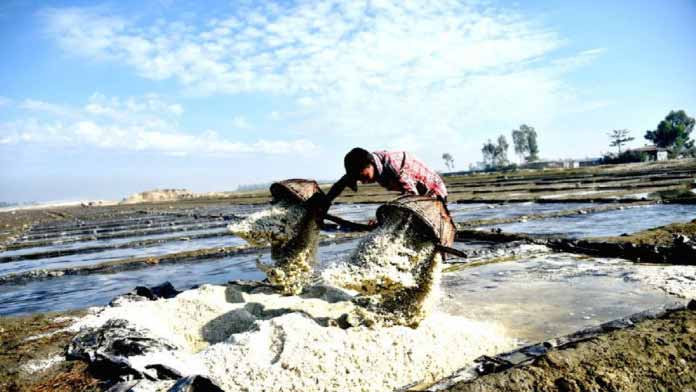
Heavy rainfall in Bangladesh's coastal regions has severely disrupted salt production just weeks before Eid-ul-Adha, triggering supply chain anxieties and driving up prices.
With production fields in Chattogram and Cox's Bazar battered by rains since late April, the country's total salt output reached only 1.792 million tonnes by May 12 falling drastically short of the seasonal 2.715 million-tonne target. The premature end to the harvest season has left field workers with fewer earning opportunities and millers facing a tight market.
The supply crunch coincides with the year's highest period of demand. Millions of animals will be sacrificed during Eid-ul-Adha, requiring massive volumes of salt to preserve raw hides for the leather industry.
With the government estimating sacrificial animal demand at over 10.1 million head this year, hide traders are feeling the squeeze. The Greater Chattogram Hide Traders Association reports that the cost to preserve a single cowhide has risen to roughly Tk 500. Financial strain, rising labor costs, and unpaid dues from tanneries have already caused the number of active traders in the region to plummet from over 200 down to just 30–35.
To cushion the blow and protect the leather supply chain, the Bangladesh Small and Cottage Industries Corporation (BSCIC) is rolling out a Tk 20 crore subsidy program. This initiative will distribute 9,819 tonnes of free salt through 270 mills to over 10,000 madrasas, orphanages, and charitable institutions.
Additionally, authorities plan to officially fix salt prices based on current stock metrics and implement strict market monitoring to prevent artificial price hikes during the festival.