Thursday ● 2 July 2026


 |


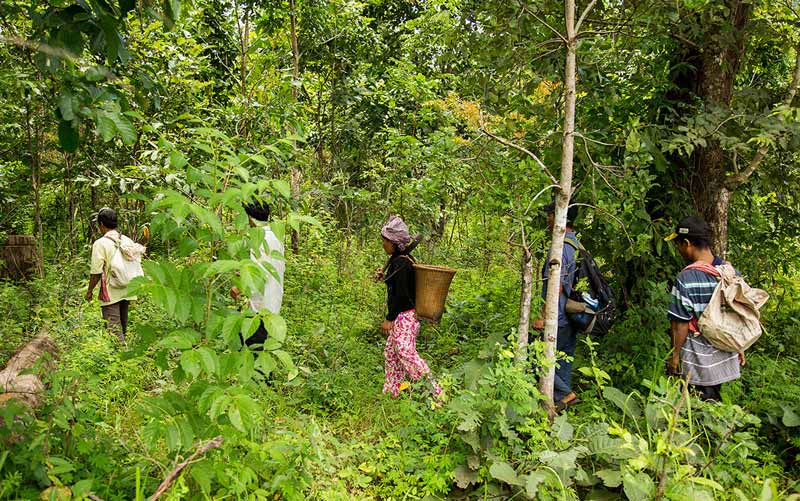
A stark contrast is visible just 10 kilometers away at the popular Shuvolong Waterfall, which dries up completely in the winter. Meanwhile, the stream in Beganachhari flows uninterrupted. "The stream flows because the forest is alive; the roots of the trees hold the water," says 70-year-old local farmer.
Unlike state-owned reserves, VCFs are entirely managed and protected by indigenous communities using ancestral knowledge rather than formal forestry education.
Traditional Governance: Managed collectively under traditional leaders like Headmen and Karbaris, with significant modern leadership roles filled by women.
Strict Conservation Rules: Cultivation (Jhum) is banned near water sources. Communities maintain firefighting committees, rotate harvesting bans during breeding seasons, and require committee permission to harvest timber.
Biodiversity Hubs: Studies show that VCFs harbor significantly higher plant and animal diversity than government reserves. A study by Chittagong University Professor Khaled Misbahuzzaman found 161 plant species, 126 animal species, and 53 bird species in the 300-acre Beganachhari forest alone.
Forest segregation began during the British colonial era in 1860, splitting the CHT into state-regulated areas and unclassed state forests. In response, indigenous communities formalized the protection of their village forests to secure vital resources. This traditional system was legally recognized under the CHT Regulation of 1900.
| Forest Management Statistics (CHT Total Area: 5,093 sq miles) | Percentage / Area |
| Government Reserved Forests (Restricted Access) | 24% (1,244 sq miles) |
| Protected Forests (Forest Dept. Control) | Over 54 sq kilometers |
| Forest Loss (2002–2022 due to development/rubber farming) | 10% |
In recent decades, development projects, displacement from the Kaptai dam, commercial rubber farming, and logging have threatened these unique ecosystems. However, a resurgence in community activism, supported by NGOs and the United Nations Development Programme (UNDP), is helping revitalize VCF committees and restore damaged habitats.
Environmentalists emphasize that these forests play a critical, unacknowledged role in carbon sequestration. While the draft of Bangladesh's National Forest Policy aims to legally recognize VCFs, climate experts note that their success is rarely highlighted in global climate change dialogues.
"These forests exist and survive under tough conditions, yet their presence is missing from international climate policy discussions," says climate experts, urging for the global promotion of this indigenous conservation model.