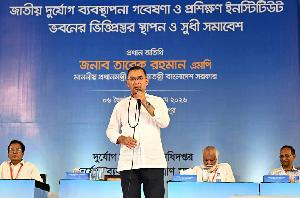
The Minister for Posts, Telecommunications and Information Technology Faqir Mahbub Anam, MP, has said that ensuring equal access to digital services for persons with disabilities is one of the government’s key priorities.
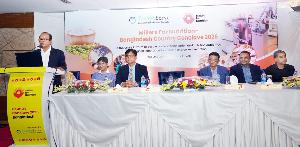
As part of the celebration of Global Accessibility Awareness Day (GAAD) 2026, Aspire to Innovate (a2i) organized an event today, Thursday, at the BIDA Auditorium in Agargaon, Dhaka. Friendship and Sightsavers co-organized the event.
State Minister for Social Welfare Farzana Sharmin, MP; Sightsavers Country Director Amrita Regina Rosario; and Ayesha Taasin Khan, Senior Director and Head of Inclusive Citizenship Sector at Friendship, attended the event as special guests. Valerie Ann Taylor, Founder of Centre for the Rehabilitation of the Paralysed (CRP), attended as guest of honour. The event was chaired by Quazi Anowar Hossain, Secretary of the ICT Division, while Md. Abdur Rofiq, Project Director (Additional Secretary) of a2i, delivered the welcome remarks. Abdullah Al Fahim, Head of Programme Management, moderated the event, and accessibility consultant and visionary disability rights advocate Vashkar Bhattacharjee also spoke.
Faqir Mahbub Anam said, “Accessible websites and apps have been developed keeping in mind the principle that no one should be left behind. From now on, all digital services will be designed considering the needs of persons with disabilities. Because this is not a matter of charity; we see it as their right. Technology must be aligned with people’s needs, abilities and diversity.”
He further said, “Through new technologies, we want to connect persons with disabilities more actively with the mainstream of society. We want to turn the children of our country with disabilities into assets. The ICT Division will take all necessary initiatives to ensure a dignified position for persons with disabilities in society through technology.”
Farzana Sharmin said the government will provide full support for the growth of public and private institutions and innovative initiatives that contribute to digital accessibility. Ensuring universal accessibility is essential to building a Bangladesh for all. The government is working so that all citizens, including persons with disabilities, can easily access digital services.
The ICT secretary said Bangladesh’s digital progress will only be complete when every citizen can use digital services with dignity, independence and equality. To achieve this, government institutions, development partners, civil society, organizations of persons with disabilities, technology innovators and the private sector must work together in a coordinated manner.
In his welcome remarks, Md. Abdur Rofiq said that although a significant number of people in the country live with some form of disability, they still do not receive the full benefits of digital services in many areas. To ensure the digital inclusion of persons with disabilities, a2i is working to gradually make government digital services accessible. He also mentioned plans to develop AI-based sign language tools, make e-commerce and e-learning platforms more inclusive, and establish a Disability Innovation Knowledge Platform for knowledge sharing.
Vashkar Bhattacharjee said, “Bangladesh first—if everyone has digital access. This is not charity; it is our constitutional right.” He added that a2i’s Disability Innovation Lab is working as a specialized initiative to ensure digital accessibility. The lab is advancing inclusive innovation in areas such as government digital services, educational materials, skills development, employment, entrepreneurship development and awareness raising. Alongside the initiative to ensure Accessibility Level A on government websites, initiatives such as multimedia talking books, accessible dictionaries and MuktoPaath have created new opportunities for students and citizens with disabilities.
Amrita Regina Rosario said Sightsavers has long been working in Bangladesh to eliminate avoidable blindness, establish the rights of persons with disabilities, and support the implementation of inclusive policies. Their “Equal Bangladesh” campaign is bringing together organizations of persons with disabilities and civil society to advocate for rights-based inclusion.
Ayesha Taasin Khan said true inclusion is ensured only when technology, services and opportunities are equally accessible and usable for everyone. Friendship is working to ensure equality, accessibility and meaningful participation for all, including persons with disabilities, and to deliver innovative essential services to persons with disabilities living in climate-vulnerable and hard-to-reach remote areas.
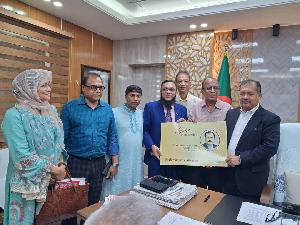
At the event, five initiatives were recognized. These were the Ministry of Social Welfare’s Therapy Service Management for Persons with Disabilities and Disability Information System; Bangladesh Police’s Online Police Clearance Certificate Service; the Gram Adalat Mobile App of the Local Government Division and UNDP; and Eastern Bank’s EBL Skybanking initiative.
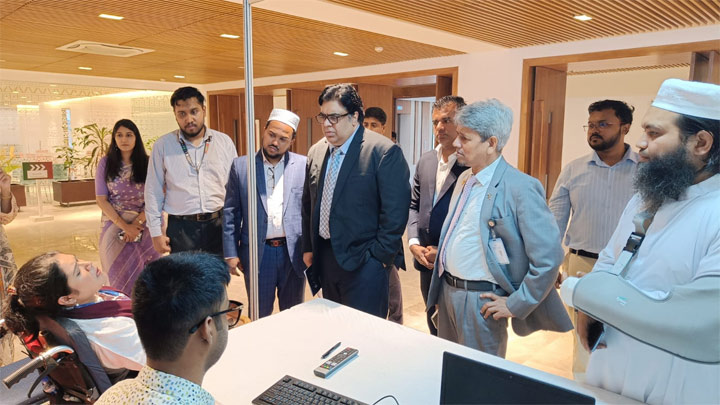
In addition, Minister Faqir Mahbub Anam visited various innovators’ stalls set up around disability-friendly innovations in the morning, while Rehan Asif Asad, Adviser to the Honorable Prime Minister on Posts, Telecommunications and Information Technology, visited them in the afternoon.
After visiting the stalls, they expressed appreciation for the innovations and highlighted the government’s goodwill and commitment to building an inclusive Bangladesh for all. Other guests and senior officials from the relevant organizations were also present.
Global Accessibility Awareness Day is observed worldwide every year on the third Thursday of May. Its aim is to make websites, mobile apps, software and digital services easier to use and accessible for persons with disabilities. As a signatory to the United Nations Convention on the Rights of Persons with Disabilities and the Marrakesh Treaty, Bangladesh is committed to ensuring digital inclusion. At the same time, digital accessibility is receiving importance under the Rights and Protection of Persons with Disabilities Act and the government’s policy priorities.