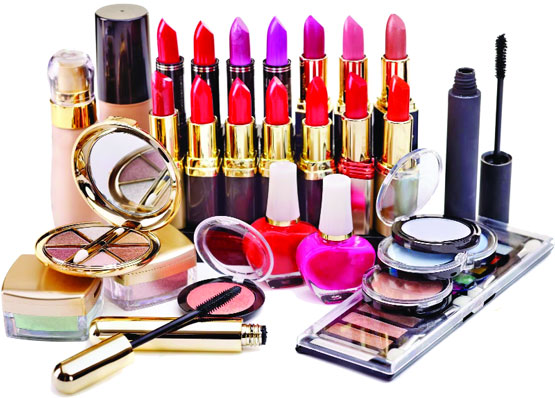
The cosmetics market is booming now. You can find thousands of brand, non-brand, local and foreign products just by raising your hand. There are more than 500 different types of cosmetics from feet to head in the market of the country. However, the seller himself does not know which of these is real and which is fake many times.
Bangladesh Standards and Testing Institution (BSTI), the national standard-setting and quality-controlling institution, could not fix the quality of most of these products. Consumers are being cheated and health risks are increasing due to the use of adulterated products.
Research has revealed that more than 500 skin care products and color cosmetics are used in the country’s market, but only 106 have BSTI quality certificates. Even though low-quality cosmetics contain harmful ingredients, BSTI is still limited to controlling the levels of lead and mercury. Where now harmful chemicals like benzophenone, arsenic, cadmium, retinyl palmitate, mercuric chloride, calomel are being used frequently. They are not looking to take action against any common products or set specific standards, other than banning and stopping the sale of certain lightening creams containing lead and mercury.
BSTI’s Quality Wing Director Saidul Islam told, ‘Cosmetics market is growing rapidly.’ There we should not give as much importance to products like cosmetics along with standardizing other daily necessities. But it is not out of control. Saidul Islam said, ‘The creation of this standard is also time-consuming and subject to approval through the committee.’ If a cosmetic does not have a global standard or a country does not have a standard then it is delayed further.’
Excessive parabens
Meanwhile, a recent study found excessive amounts of parabens in everyday products such as toothpaste, handwash, and low-quality and fake products. Last February, a study by the Environment and Social Development Organization (ESDO) revealed dangerous levels of parabens in cosmetics. The agency reported the results after testing samples from the lab of the Onjin Institute for Occupational and Environmental Health (WIOEH), a South Korean institution. However, BSTI does not have any system for testing these harmful chemicals.
Almost all of the brands tested by Esdo in the study were well-known brands. But more dangerous than this are fake and low-quality everyday products sold in the country. After that study, BSTI found no effective measures or testing of products from abroad or limiting the levels of other harmful chemicals including parabens.
Parabens are a type of preservative-like chemical commonly used to extend the shelf life of cosmetics, personal care products, and pharmaceuticals. As parabens are less expensive and readily available, manufacturers use them in greater quantities. Regular use of these products increases the risk of various diseases including skin cancer.
Senior Technical Advisor of research organization Esdor and former chairman of Chemistry Department of Jahangirnagar University. Md. Abul Hashem told, ‘Low quality cosmetics use highly toxic chemicals. They are silently damaging our health and putting lives at risk.’
He also said, ‘Policymakers need to be stricter in controlling the use of parabens in consumer products to protect public health. Now is the time to ban the use of these chemicals. That call is being conveyed to the Bangladesh government.
70 percent of cosmetics fake
A study of Dhaka University says that 15 percent of the demand for cosmetics in the country is being met by domestic companies. 15 percent is imported. The remaining 70 percent of cosmetics are made with fake and low-quality harmful ingredients. These adulterated cosmetics manufacturing factories have been established in old Dhaka’s Chawkbazar, Islampur, Keraniganj’sJinjira and various district towns outside Dhaka. They are extremely harmful to public health.
According to the Consumers Association of Bangladesh (CAB), many brands of cosmetics established in the market do not have labels and expiry dates. A survey showed that 45 percent of cosmetic products do not have BSTI certificate, 75 percent of the products do not have the address of the manufacturer.
Along with Unilever, Square Toiletries, Kohinoor Chemical, Lalbagh Chemical, the products of big brands imported from abroad are being openly marketed by unscrupulous traders. As a result, if you raise your hand, you will find fake and adulterated products instead of real ones. No one can tell which is real and which is fake by looking at the packaging or the product inside.
Again, the packaging of foreign imported products imitates all the famous brands of cosmetics and it is being marketed from big supershops to brand houses. In many cases, fake cosmetics are also being sold in abandoned wrappers and boxes.
AHM Safikuzzaman, former director general (DG) of the National Consumer Protection Directorate and secretary of the Ministry of Labor and Employment, told, ‘There is no cosmetic product in Bangladesh that is not fake.’ When these packaged products come to Bangladesh, they have to go through many steps. The first of these is that the product must contain information on the importer. But you will find that most of the products do not have import information. This proves that these cosmetics are not coming through the proper channel of import. These are illegal products.
Safikuzzaman also said, ‘In addition, there are now fake product factories all over the country. Who are counterfeiting famous brand products. Which is a serious threat to public health.
Standards of cosmetics neglected
In this regard, Vice President of Consumer Association of Bangladesh (CAB) SM Najer Hossain told that despite all these problems, the government or anyone has never shown the importance of discipline in the cosmetics market. BSTI can’t shirk its responsibility as a national standard setting and quality control body. They have neglected to formulate proper standards of cosmetics.
There is no information on how many types of cosmetics are available in the market in BSTI approved countries. However, the organization believes that 30 percent of the total production has been brought under the BSTI standard certificate. Still 70 percent of the country’s products are out of quality control.
Manjurul Karim, Assistant Director (Chemicals) BSTI’s Quality Wing, said, ‘The quantity of our products that have been standardized includes most of the conventional cosmetics. However, this market is constantly growing. As a result, short-range work becomes difficult.
Bardem Hospital’s Department of Diabetes and HormonesDr. Farooq Pathan told that traders are using harmful chemicals in everyday products due to the inactivity of the monitoring agencies at the field level. As a result, sometimes people are suffering from diseases like hormones, thyroid, infertility without knowing. Apart from this, the rate of suffering from deadly diseases like cancer is also increasing in the long term. He thinks that the matter needs to be looked at seriously.